Workshops
Mycenaean Foundation Workshops: Where Theory Meets Practice
At the Mycenaean Foundation, we believe that the past is best understood not only through study, but through experience. Our workshops transform archaeological knowledge into hands-on exploration, allowing participants to move beyond theory and actively engage with the cultures, technologies, beliefs, and daily practices of the ancient world.
Designed to complement our educational courses, these workshops provide the opportunity to step into the shoes of the ancients and discover how people lived, created, communicated, and interacted with their environment. Through practical activities, demonstrations, and experimental learning, participants explore specific aspects of life within their regional and chronological contexts — from the Bronze Age Aegean to Classical Greece and beyond.
Each workshop offers a unique window into the past, encouraging participants to investigate what has changed over time and what has remained remarkably constant. By recreating ancient techniques, analyzing historical evidence, and engaging directly with materials and practices, participants gain a deeper appreciation for the creativity, innovation, and human experiences that connect us across thousands of years.
Our workshops are organized into three thematic journeys:
CREATE
Experience the skills and craftsmanship of the ancient world by making, shaping, and designing through traditional techniques.
Workshops:
- Greek Pottery Workshop
- Greek Mosaic Workshop
- Greek Jewelry Making Workshop
- Greek Ceramics Workshop
- Greek Seal Stone Workshop
- Greek Marble Carving Workshop
- Aegean Mythology Workshop
DISCOVER
Investigate the methods used to uncover and understand the past. Workshops focused on interpretation, research methods, and understanding evidence.
Workshops:
- Archaeological Dig Simulator Workshop
- Artifact Conservation and Restoration Workshop
- Archaeological Drawing Workshop
- Linear B Writing Workshop
- Reconstructing the Past Workshop
- Coin Workshop
EXPERIENCE
Step into the daily lives, beliefs, and practices of ancient societiesExplore experiences that shaped the ancient world and discover their connection to the present.
Workshops:
- Bronze Age Technology Workshop
- Ancient Navigation Workshop
- Mycenaean Music Workshop
- Ancient Games Workshop
Greek Pottery Workshop
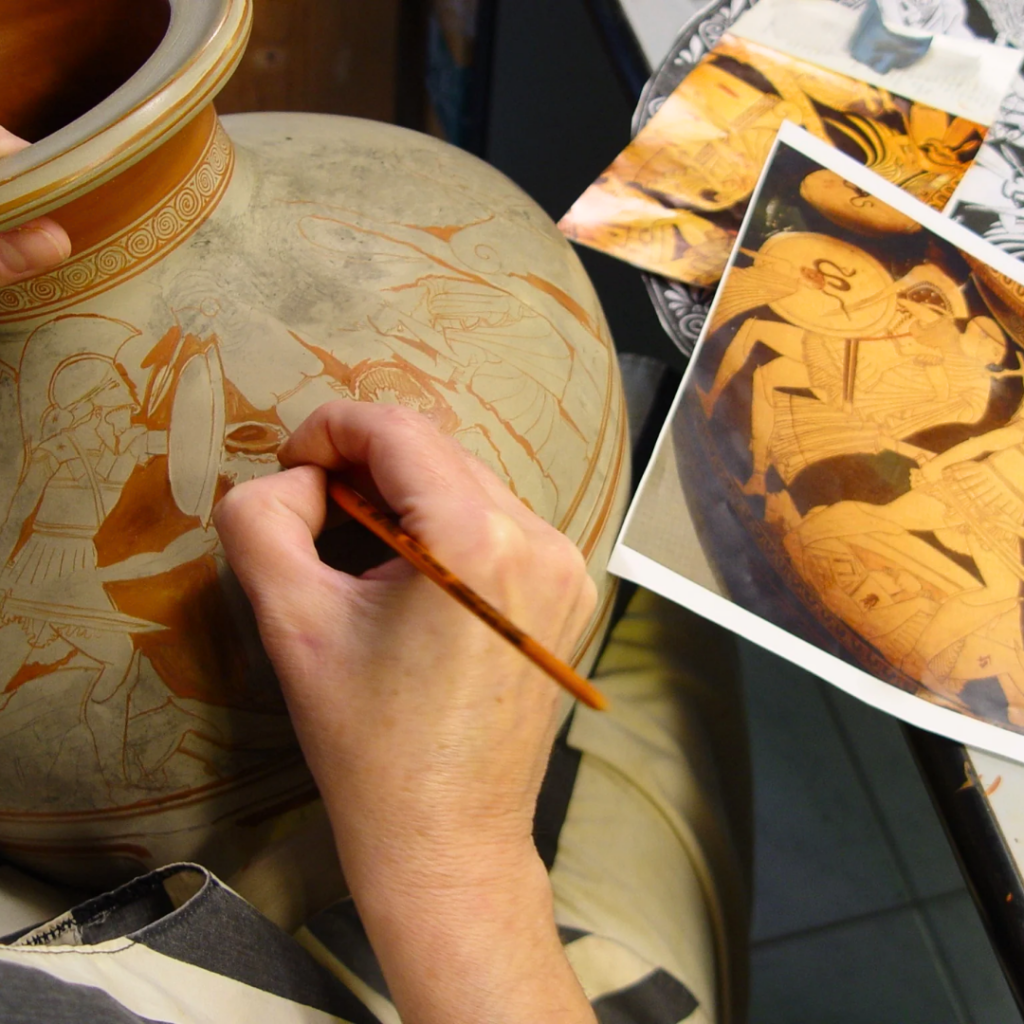
Step into the world of ancient Greek artisans in this immersive pottery painting workshop. Participants will explore the techniques and traditions of classical Greek vase decoration, learning to replicate the iconic styles of ancient master painters.
Using traditional methods inspired by antiquity, participants will draw and paint designs with slip (liquid clay) onto pottery surfaces, experimenting with both the black-figure and red-figure techniques that defined Greek ceramic art. Through careful observation of ancient examples, they will discover how Greek artists created expressive figures, intricate patterns, and dynamic storytelling scenes using line, shape, and contrast.
The workshop offers a hands-on journey into the craftsmanship of ancient Greece, combining historical insight with creative practice. Participants will develop an appreciation for the skill, precision, and artistic vision of the vase painters whose works continue to inspire the world today.
Greek Mosaic Workshop
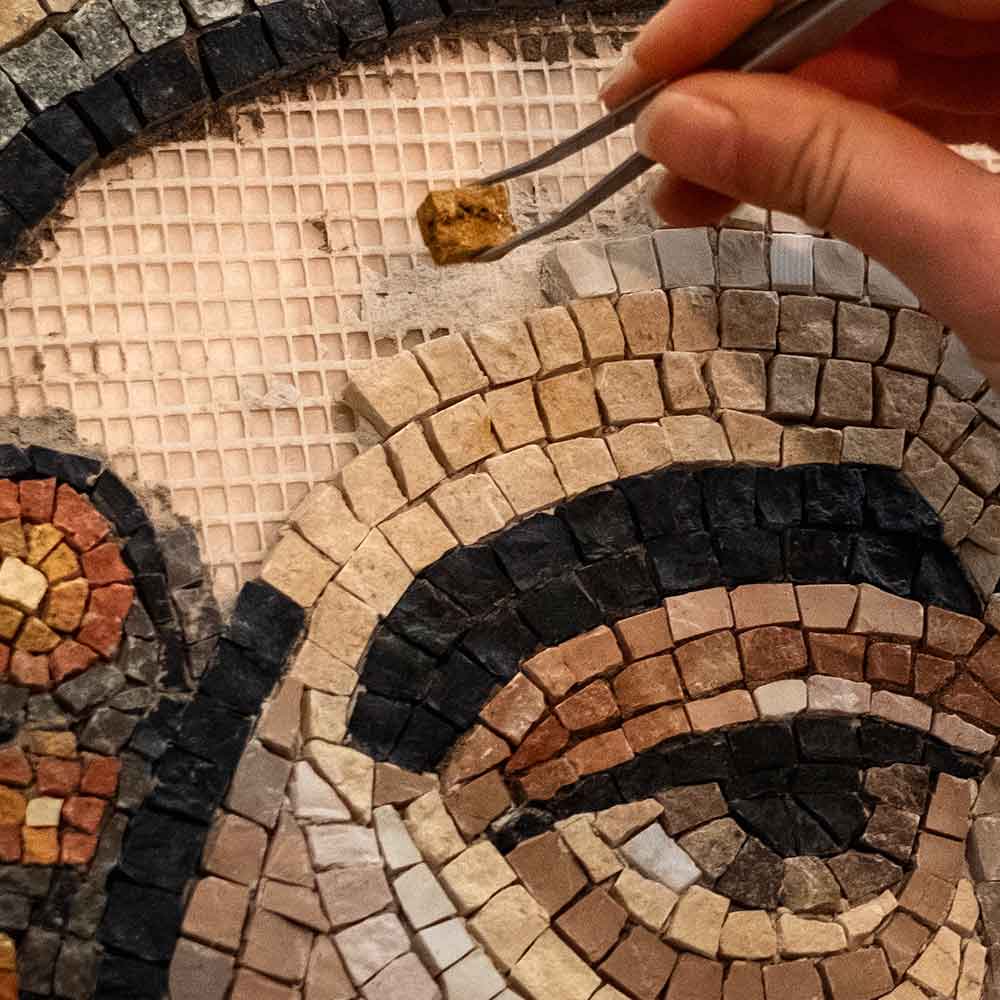
Discover the ancient art of mosaic-making and explore how Greek and Roman artists used colour, pattern, and symbolism to transform everyday spaces into meaningful works of art. In this hands-on workshop, participants will learn about the history and purpose of mosaics — from decorating floors, walls, and public spaces to communicating stories, beliefs, identity, and important moments in life. Through examining traditional motifs, symbols, and designs, participants will explore how mosaics reflected the values, mythology, and daily experiences of ancient societies.
Inspired by these timeless techniques, each participant will create their own small-scale mosaic artwork using colours, shapes, and symbols that hold personal meaning. The finished piece becomes a modern expression of what is important to them, connecting ancient artistic traditions with individual stories and contemporary creativity.
Greek Jewelry Making Workshop
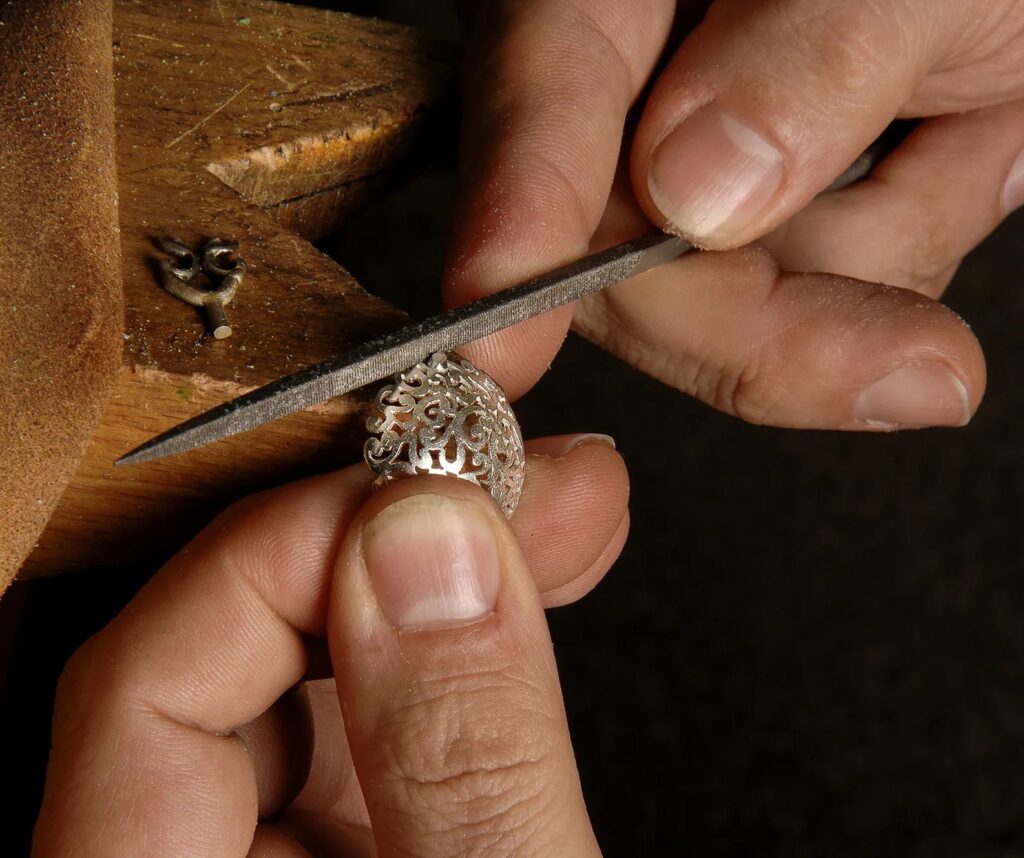
Explore the fascinating world of ancient Greek jewelry and discover how personal adornment was used to express beauty, identity, beliefs, and social status. In this hands-on workshop, participants will learn how jewelry was more than decoration — it reflected wealth, craftsmanship, cultural values, and an individual’s place within society. Through examining ancient designs, materials, motifs, and techniques, participants will explore the symbolism behind Greek jewelry, including the meanings of animals, mythological figures, natural forms, and geometric patterns. They will discover how jewelry communicated messages about power, prosperity, family, and personal identity, while also revealing the artistic skill and technological achievements of ancient craftspeople.
Inspired by these historical examples, participants will design and create their own jewelry pieces, adapting ancient ideas into personal creations. Using their chosen symbols, patterns, and styles, each participant will produce a unique sample that reflects something meaningful to them — connecting the traditions of ancient artisans with contemporary self-expression.
Greek Ceramics Workshop
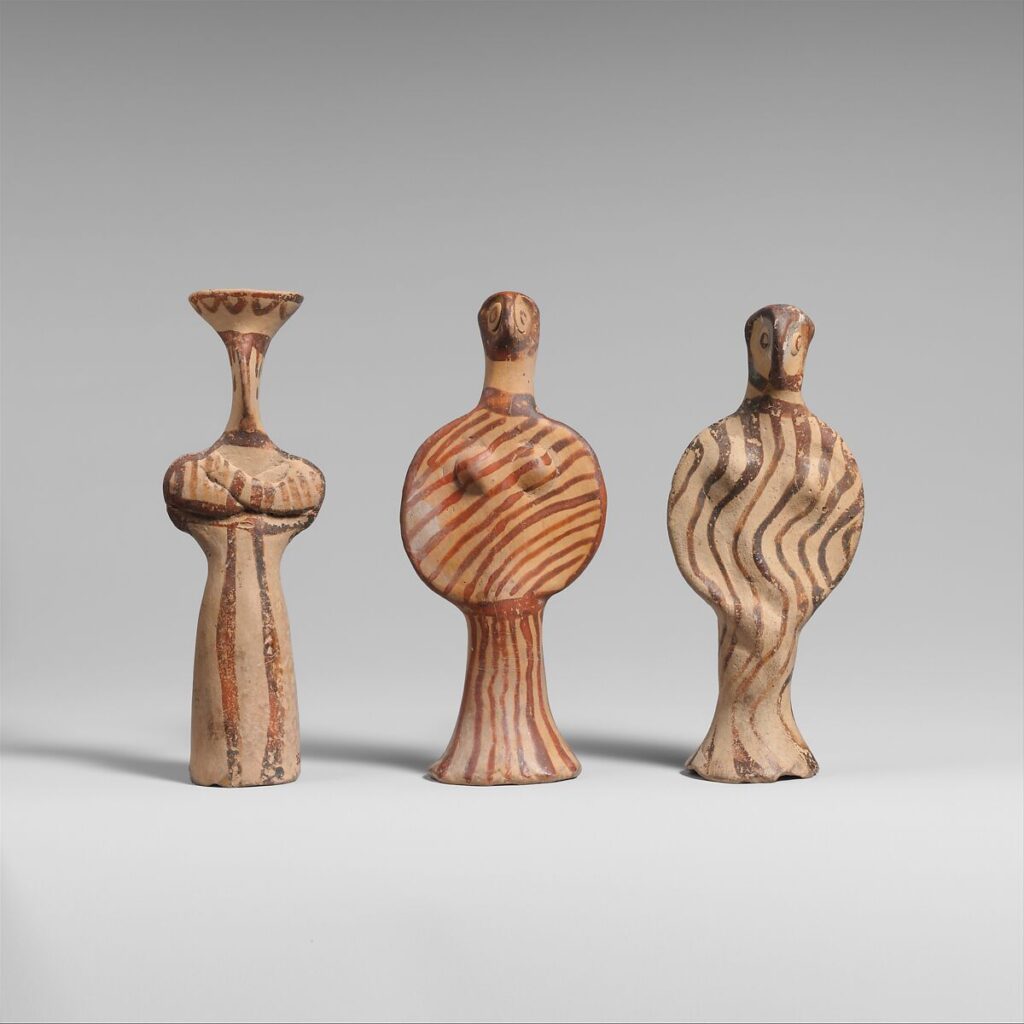
Discover the rich tradition of ancient Greek terracotta figurines and explore how ceramics played an important role in everyday life, religion, and cultural expression. In this hands-on workshop, participants will learn about the significance of these small clay sculptures, which were used as religious offerings, household objects, funerary gifts, and representations of gods, goddesses, animals, and everyday people. Through examining archaeological examples, participants will gain insight into the beliefs, customs, and values of ancient Greek society, exploring how terracotta figurines reflected mythology, worship, identity, and daily life. The workshop will also introduce the techniques used by ancient craftspeople to shape, model, and finish clay by hand.
Inspired by these ancient traditions, participants will sculpt their own terracotta figurines, creating original pieces that express a theme, belief, or idea that is personally meaningful to them. Drawing on historical forms while incorporating their own creativity, each participant will produce a unique work that connects the artistic practices of the ancient world with contemporary expression.
Greek Seal Stone Workshop
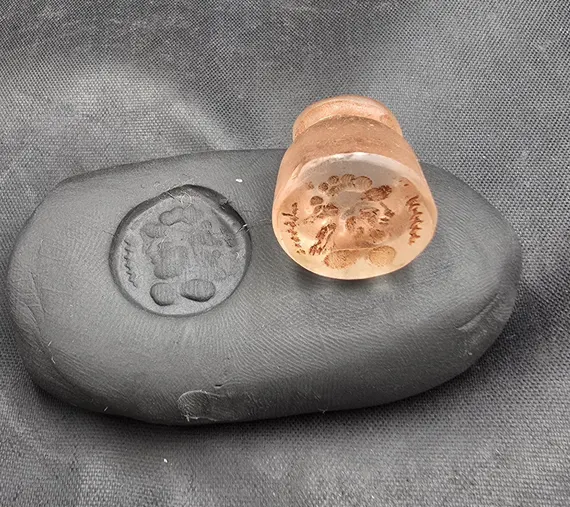
Discover the fascinating world of ancient Greek seal stones and explore how these small, intricately carved objects served as powerful symbols of identity, authority, and personal expression. Used to authenticate documents, secure possessions, and signify ownership, seal stones combined practical function with artistic craftsmanship and symbolic meaning. In this hands-on workshop, participants will examine a range of ancient seal stones, learning about their history, materials, iconography, and the cultural significance of the images they bear. Through observation and analysis, participants will explore how mythological figures, animals, geometric patterns, and everyday scenes communicated identity, status, beliefs, and personal values in the ancient Greek world.
Inspired by these historical examples, participants will select their favourite replica seal stone and explore the ancient process of seal making. They will press the seal into soft clay to create a detailed impression before pouring coloured wax of their choice into the mould, producing a three-dimensional replica of the original relief.
Greek Marble Carving Workshop
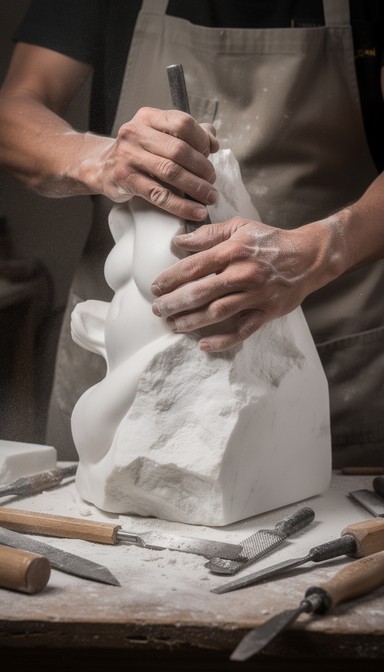
Experience the timeless art of marble sculpture in this immersive workshop. Participants will begin with an engaging lecture on the history of Greek marble, tracing the evolution of sculpture from the Archaic period through the Classical and Hellenistic eras. Through the study of changing styles, techniques, and artistic ideals, participants will gain an appreciation for how marble became the medium through which Greek artists expressed beauty, movement, mythology, and human emotion.
Following the introduction, participants will visit a traditional marble workshop in Athens, where they will meet expert craftspeople and witness the tools, techniques, and processes used in marble carving today. Our collaborators will demonstrate both traditional and modern methods, explaining the essential skills, safety practices, and the dos and don’ts of working with marble while offering insight into this centuries-old craft. Guided by experienced instructors, participants will then carve their own small marble sculpture, choosing a design that reflects their personal interests or artistic inspiration. From shaping the stone to refining the final details, they will experience the patience, precision, and creativity required to transform raw marble into a finished work of art
Archaeological Dig Simulator Workshop
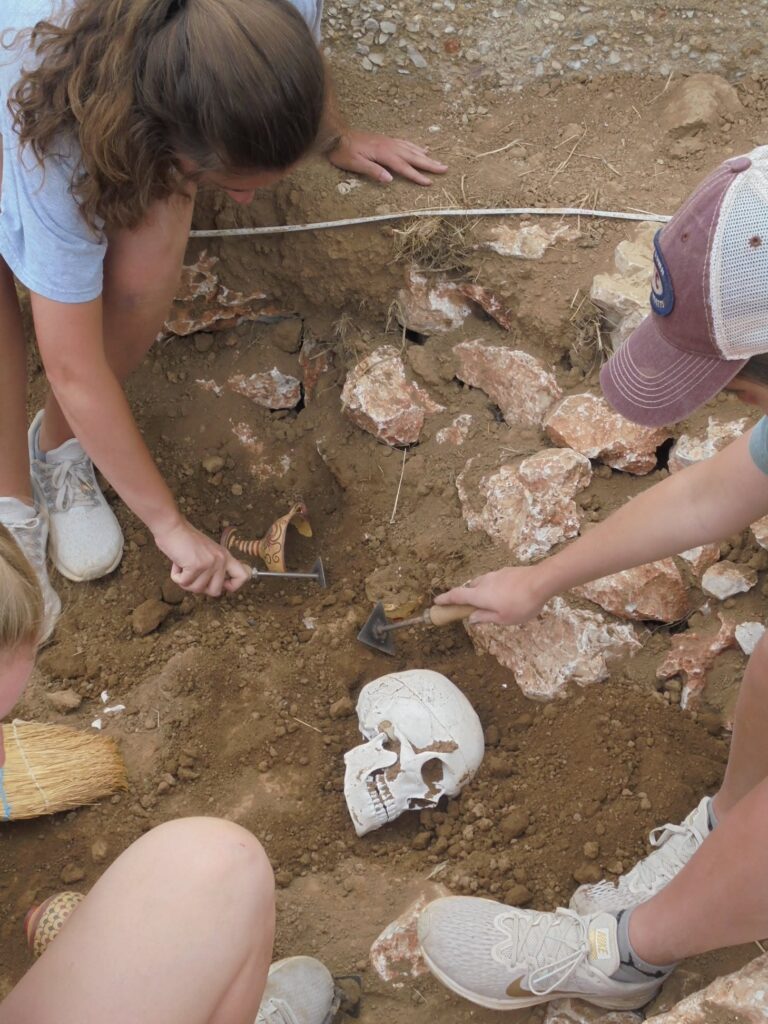
Extend your archaeological learning journey beyond the online course and step into the practical world of excavation. This hands-on workshop builds upon the theoretical foundations introduced online, allowing participants to move from studying archaeological methods and concepts to actively experiencing the process of discovery. Beginning with a brief review of key archaeological principles, participants will revisit the importance of excavation, stratigraphy, artifact interpretation, and the careful documentation of evidence. They will then apply this knowledge in a simulated archaeological dig, experiencing firsthand how archaeologists investigate sites and uncover the stories of past civilizations.
During the excavation activity, participants will carefully explore prepared archaeological layers, uncover hidden artifacts, and practice the methods used by professionals in the field — including observation, recording, classification, and interpretation. Each discovery will become a clue, helping participants reconstruct aspects of the culture, daily life, and history behind the objects they uncover.
Artifact Conservation and Restoration Workshop
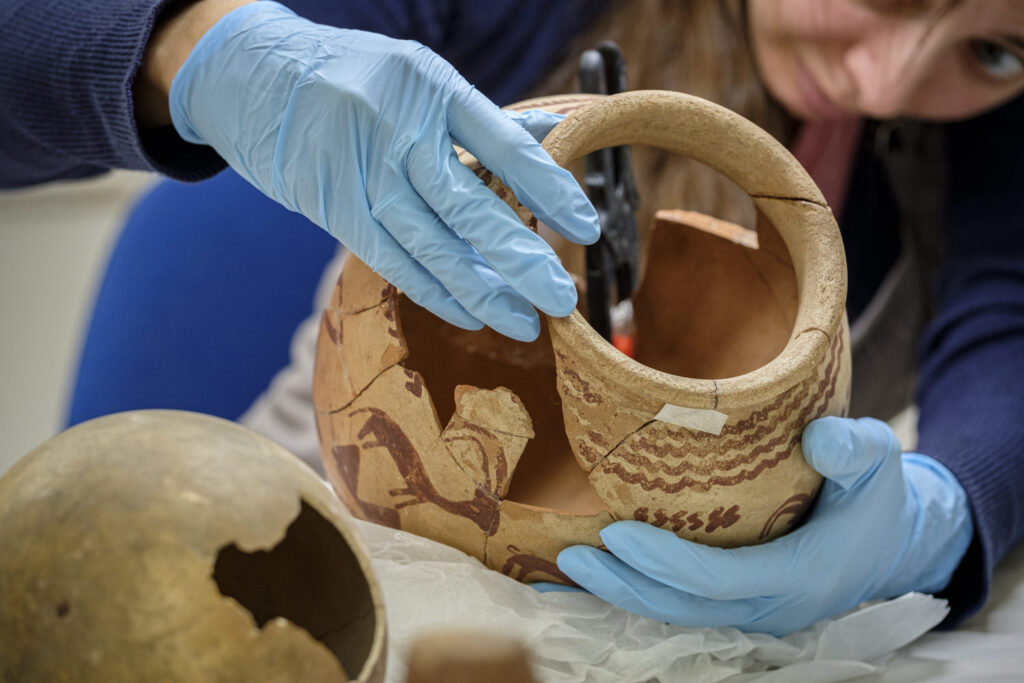
Extend your archaeological learning journey beyond theory and explore the practical skills involved in preserving ancient objects. This hands-on workshop introduces participants to the fascinating field of artifact conservation and restoration, transforming knowledge from the online course into an opportunity to work directly with archaeological materials.
Beginning with an introduction to the principles of conservation, participants will learn how specialists study, stabilize, and preserve objects while respecting their historical value and integrity. Through the examination of different materials — including ceramics, lithic tools, and metal artifacts — participants will discover how each material presents unique challenges and requires specific approaches for care and restoration.
During the workshop, participants will explore the techniques used by conservators to analyze damaged objects, understand deterioration processes, and apply restoration methods. They will gain insight into the delicate balance between repairing an artifact and preserving the evidence that reveals its history, craftsmanship, and use. Through practical activities, participants will work with replica or training materials to experience aspects of the conservation process, including cleaning, reconstruction, stabilization, and documentation. They will develop an appreciation for the precision, patience, and scientific knowledge required to protect cultural heritage.
Archaeological Drawing Workshop
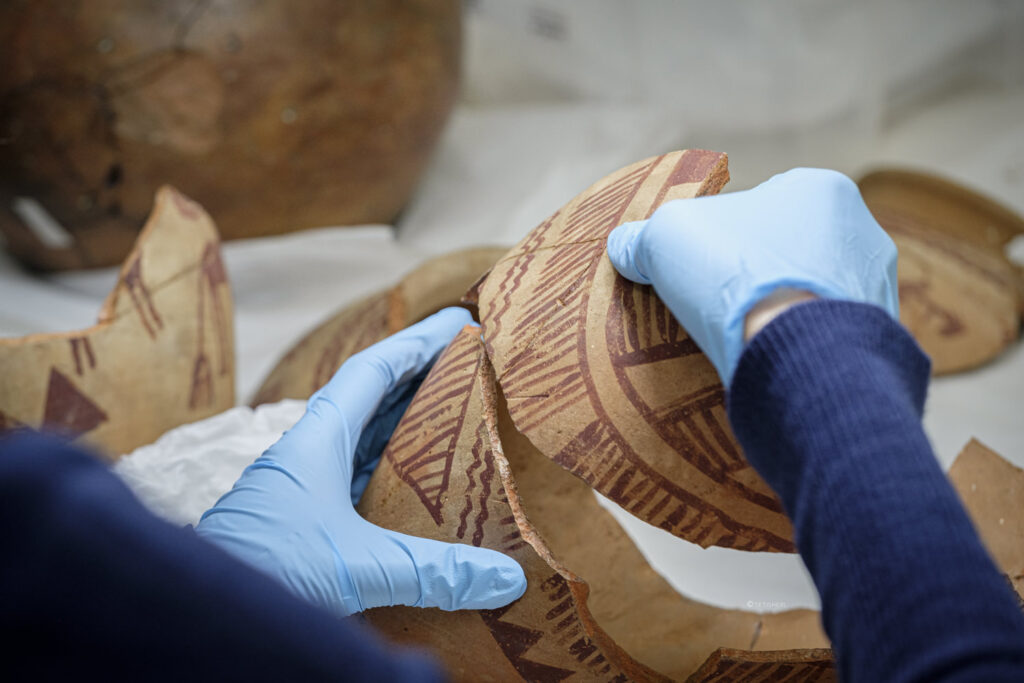
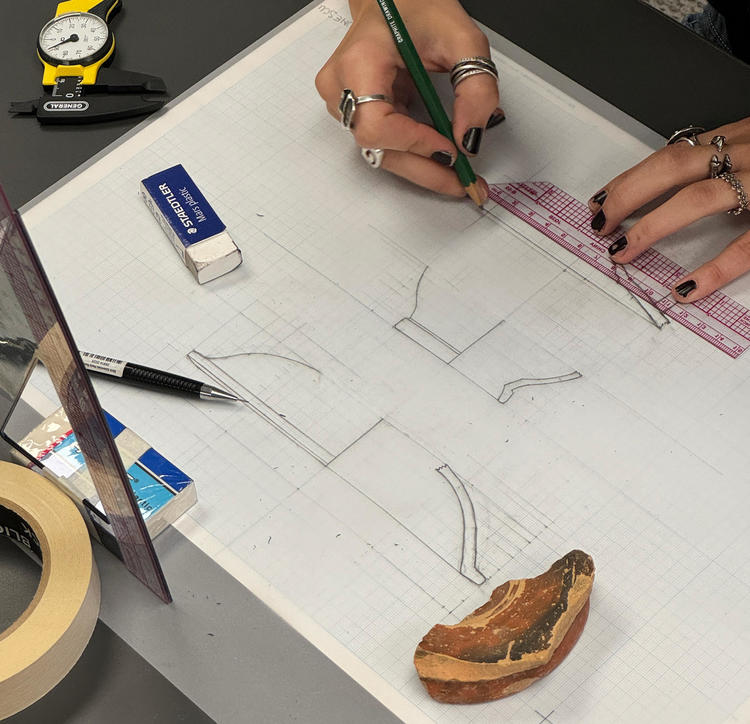
This hands-on workshop introduces participants to the essential role of archaeological drawing in recording, studying, and communicating discoveries. Beginning with an introduction to the principles of archaeological illustration, participants will learn how accurate drawings are created for museum documentation, research publications, excavation reports, and academic studies. The workshop will explore the importance of scale, proportion, line weight, detail, and visual clarity when representing artifacts and architectural remains. Through practical exercises, participants will work with examples of archaeological objects and structures, learning how to observe, analyze, and translate three-dimensional forms into precise two-dimensional drawings. They will practice traditional inking techniques used in archaeological illustration, as well as explore digital drawing methods that are increasingly used in modern research and publication.
Participants will learn how archaeological drawings reveal information that photographs alone cannot always communicate, highlighting manufacturing techniques, construction details, decoration, and evidence of use or alteration over time. They will create their own professional-style archaeological illustrations, gaining insight into the careful balance between scientific accuracy and artistic skill.
Linear B Writing Workshop
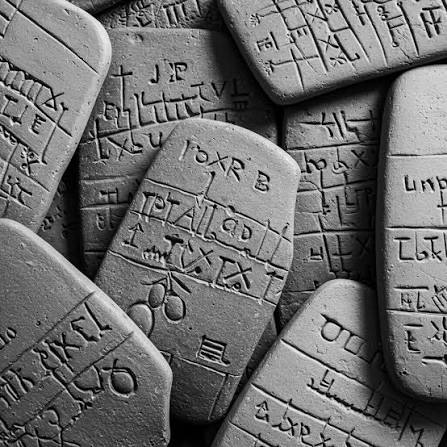
Step into the world of the ancient Mycenaeans and discover the earliest known form of Greek writing through an immersive Linear B workshop. Beginning with an introduction to Linear B, participants will learn about its origins, the Mycenaean civilization, and the role of this script in recording administrative, economic, and cultural information on clay tablets. Through exploring the signs, sounds, and structure of this ancient writing system, participants will gain insight into how languages evolve and how ancient dialects connect to the languages we use today. During the workshop, participants will learn the basics of the Linear B syllabary and practice reading and writing simple words and phrases phonetically. They will then translate a short personal text of their choice — such as a meaningful quote, phrase, or message — into Linear B, creating a unique connection with this ancient language.
By stepping into the role of a Mycenaean scribe, participants will experience the challenges and discoveries of working with a “dead” language, gaining a deeper appreciation for linguistic evolution, cultural continuity, and the human desire to record and communicate ideas across thousands of years.
Reconstructing the Past Workshop
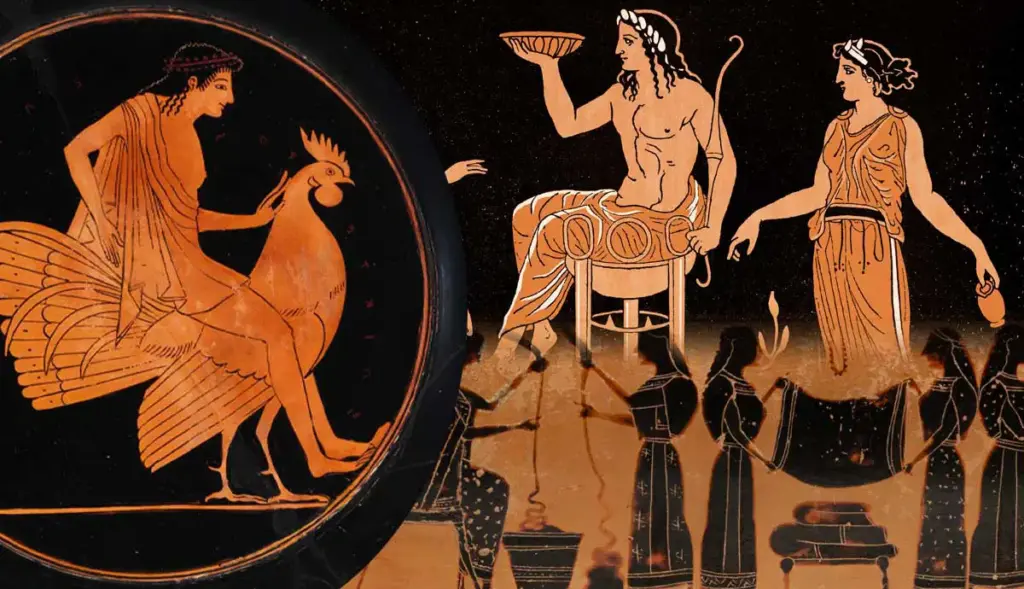
Explore how images shaped the way ancient societies understood themselves and communicated ideas of power, identity, and social values. This workshop examines how the educated elite of the Classical period used art and visual storytelling as a powerful tool to influence, persuade, and reinforce cultural ideals.
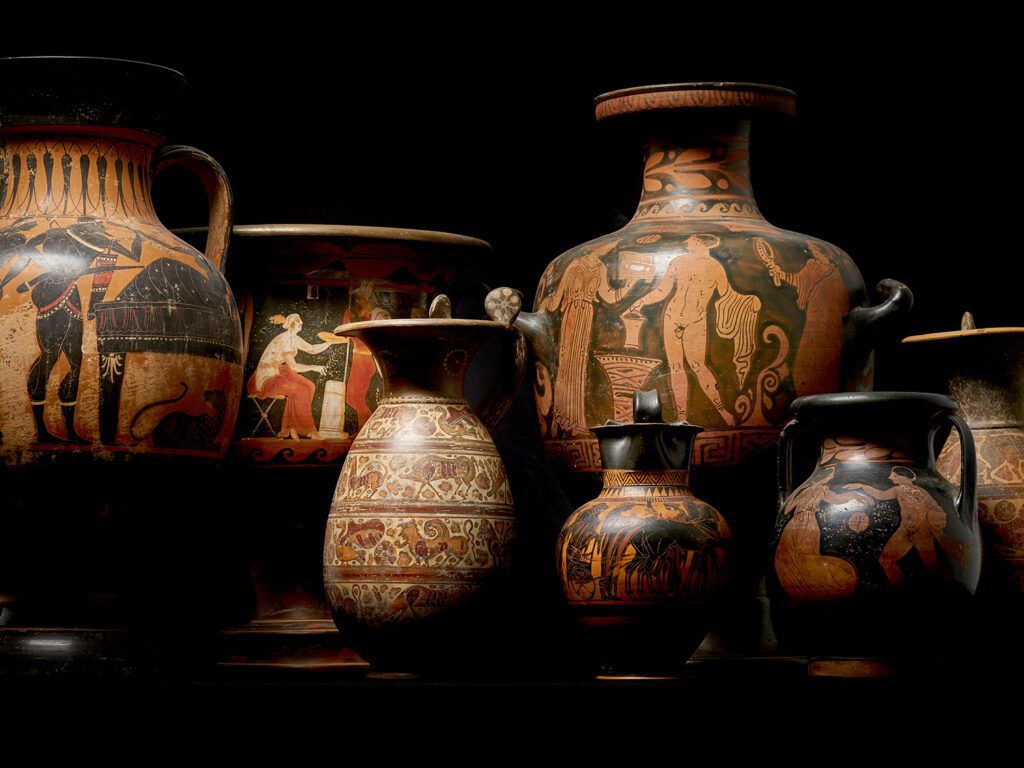
Participants will learn how to analyze and interpret Greek vase paintings by examining composition, symbols, figures, gestures, and narrative scenes. They will investigate the context in which these objects were created and used, considering questions such as: Who was the intended audience? What messages were being communicated? How did imagery reflect or reinforce the values of the society that produced it? Through guided analysis and discussion, participants will practice reconstructing aspects of ancient Greek life by reading visual evidence in the same way archaeologists and historians do. They will uncover how objects can reveal not only artistic achievements but also the beliefs, ambitions, and power structures of the cultures behind them.
Coin Workshop: From Barter to Currency
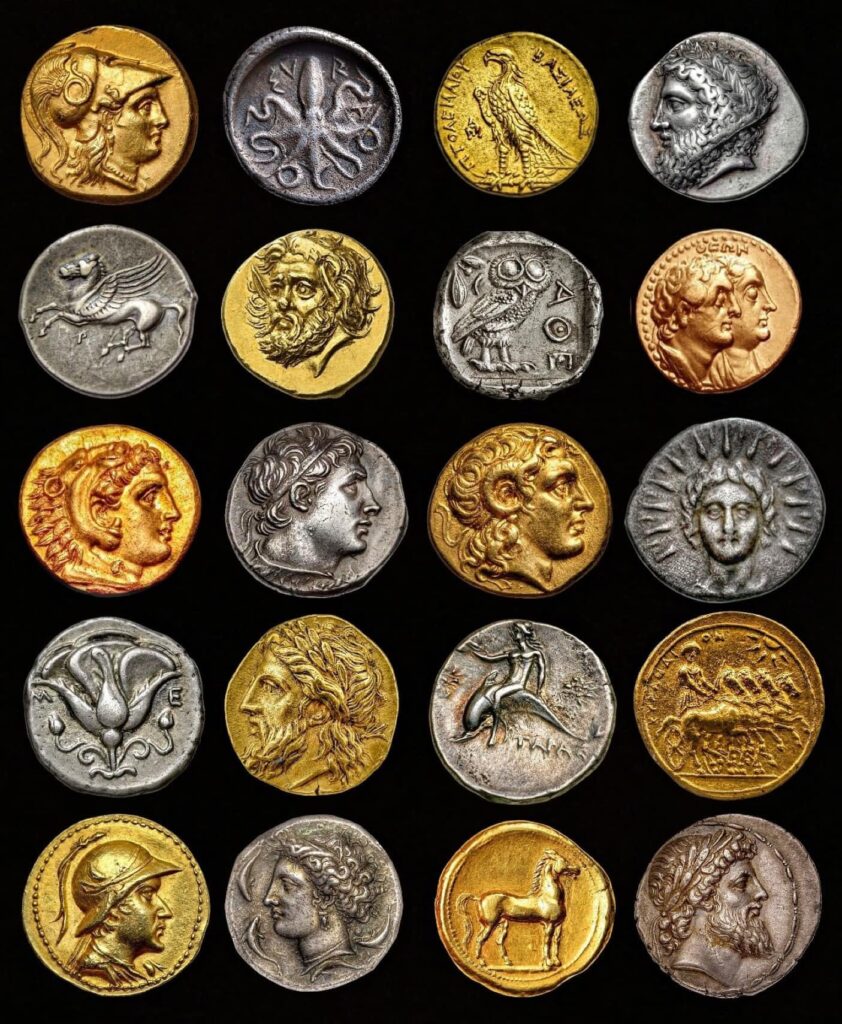
Discover the evolution of human exchange and explore how coins transformed societies, economies, and systems of communication. This workshop follows the journey from early trade-based economies to the development of coinage and examines how coins became not only tools of commerce but also powerful reflections of political authority, cultural identity, and historical change. Beginning with an introduction to the origins of money, participants will explore how societies moved from barter and commodity exchange toward standardized currency. They will learn how the invention of coinage in the ancient Greek world revolutionized trade, allowing value to be measured, transferred, and recognized across different communities.
Through the study of ancient and modern coins, participants will examine the elements that allow historians and archaeologists to identify and classify currency, including iconography, inscriptions, metals, weight, thickness, shape, and manufacturing techniques. They will analyze how images of gods, rulers, symbols, and civic identities reveal the values and priorities of the societies that produced them. Participants will practice categorizing coins chronologically, tracing developments from early Greek coinage of the 7th–6th centuries BCE through to modern currency of the 21st century. By comparing materials, designs, and production methods across time, they will uncover how coins serve as miniature historical documents that preserve stories of economics, politics, art, and cultural exchange.
Bronze Age Technology Workshop
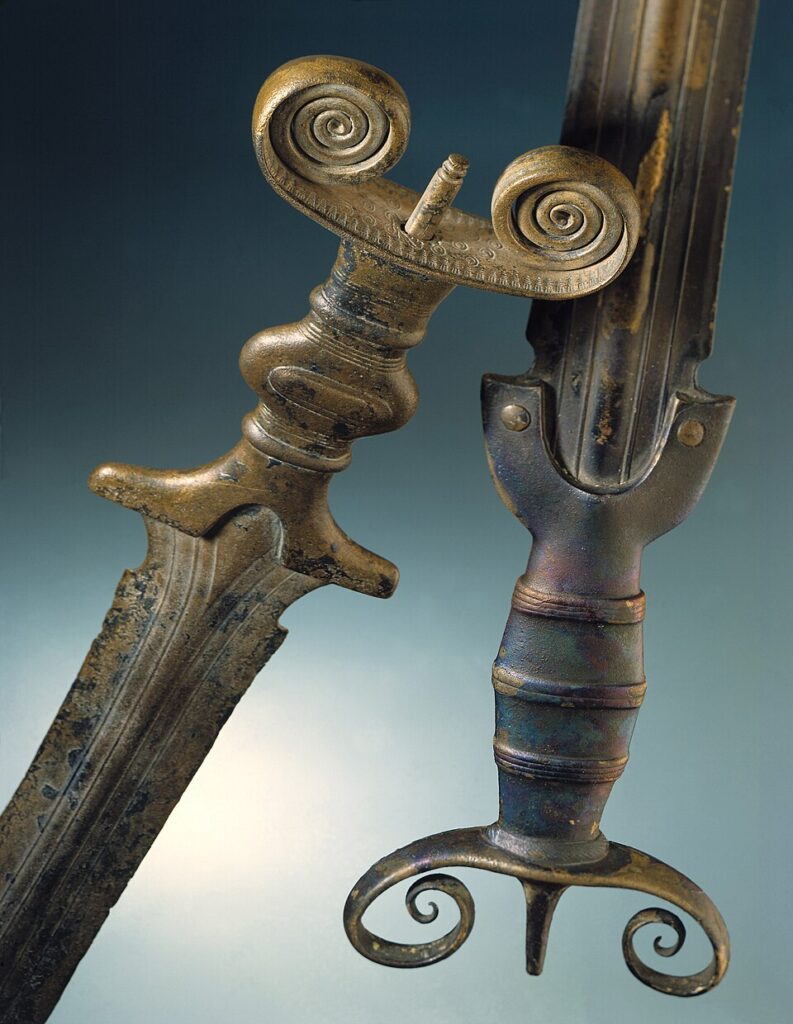
Step into the technological world of the Bronze Age and discover how advances in metallurgy transformed ancient societies. This workshop explores the development, craftsmanship, and practical uses of bronze technology, revealing how tools and weapons shaped daily life, trade, warfare, and social organization.
Beginning with an introduction to Bronze Age innovation, participants will learn about the discovery and production of bronze, the processes involved in metalworking, and the impact of this new material on ancient communities. Through the study of archaeological examples, they will examine how tools, weapons, and objects reflected technological knowledge, craftsmanship, and the needs of the societies that created them. The workshop will explore a range of Bronze Age artifacts, including agricultural tools, household implements, and weapons used for hunting, defense, and warfare. Participants will investigate how these objects were designed, manufactured, and used, while considering what they reveal about ancient economies, skills, and ways of life.
Ancient Navigation Workshop
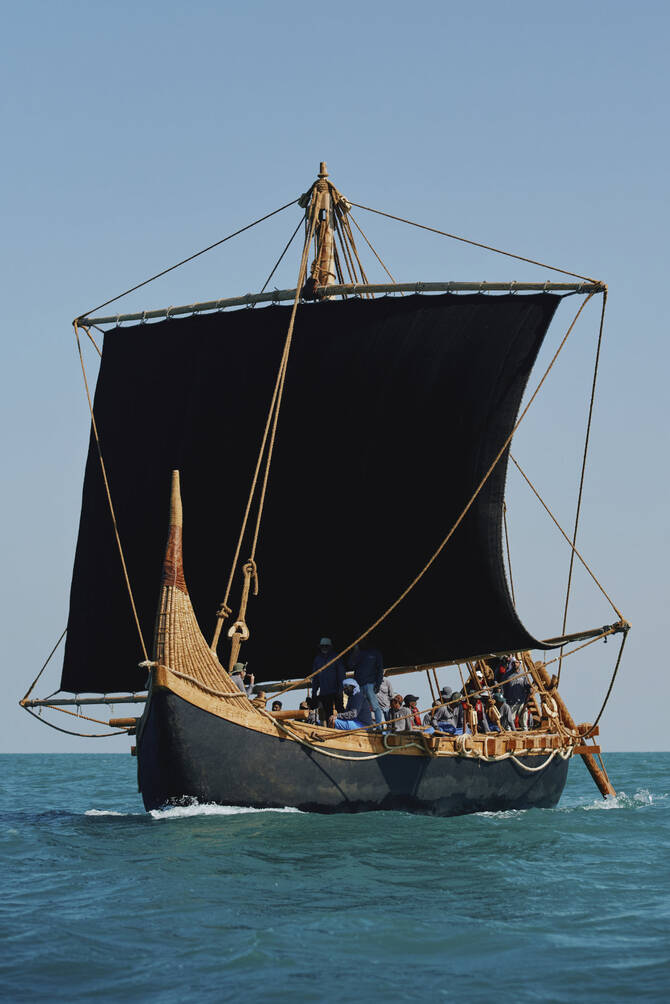
Set sail into the world of ancient maritime exploration and discover how Bronze Age communities navigated seas, connected cultures, and expanded their horizons. This workshop explores the knowledge, skills, and technologies that allowed ancient sailors to travel across the Mediterranean long before modern navigation systems existed. Beginning with an introduction to Bronze Age seafaring, participants will learn how ancient communities built ships, planned voyages, and used natural indicators such as the sun, stars, winds, currents, coastlines, and landmarks to navigate open waters. Through the study of archaeological evidence, trade routes, and ancient maritime networks, participants will explore how the sea acted as a bridge connecting civilizations through commerce, migration, and cultural exchange.
Participants will develop an understanding of ancient maps and navigation techniques, learning how to interpret geographic information, follow routes, and reconstruct journeys undertaken by ancient sailors. They will explore how archaeologists use shipwrecks, artifacts, and historical records to understand movement across the ancient Mediterranean. Through interactive activities, participants will practice elements of ancient navigation, including map reading, route planning, and understanding the challenges faced by early explorers. They will gain insight into the relationship between geography, technology, and human curiosity that drove ancient societies to venture beyond familiar shores.
Ancient Greek Music Workshop
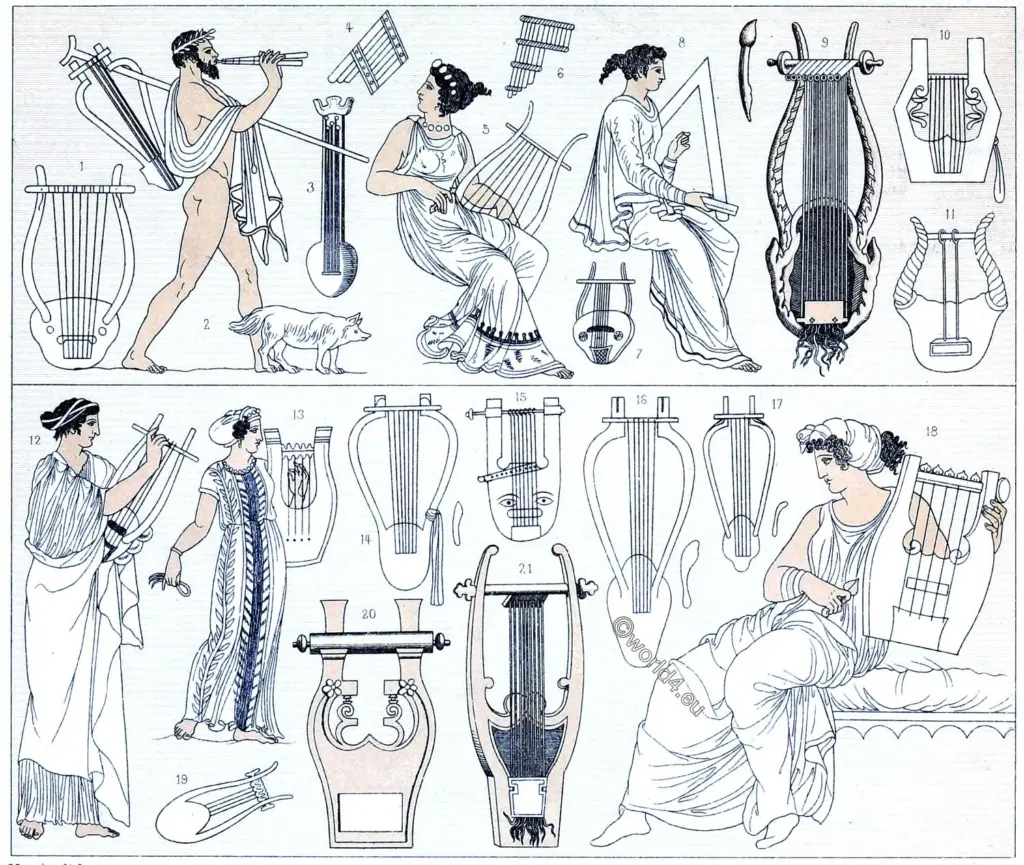
Discover the musical traditions of the Ancient Greek world and explore how sound, rhythm, and performance connected ancient communities. Beginning with an introduction to Ancient Greek music, participants will explore archaeological evidence such as depictions, written records, artifacts, and surviving ancient instruments to understand the role of music in Ancient Greek society. They will learn how music accompanied religious ceremonies, celebrations, storytelling, and social gatherings, revealing important aspects of Ancient Greek culture and identity.
Through the study of ancient instruments, participants will examine their construction, materials, and possible uses, exploring instruments such as lyres, flutes, percussion instruments, and other forms of sound-making devices known from the ancient Mediterranean. They will investigate how researchers use archaeological clues, comparative studies, and experimental archaeology to reconstruct ancient sounds and rhythms. Participants will explore ancient musical patterns and rhythms, experimenting with reconstructed instruments and techniques to gain a sense of how music may have sounded in antiquity. Through guided activities, they will experience the challenges of bringing fragments of the past back to life through sound.
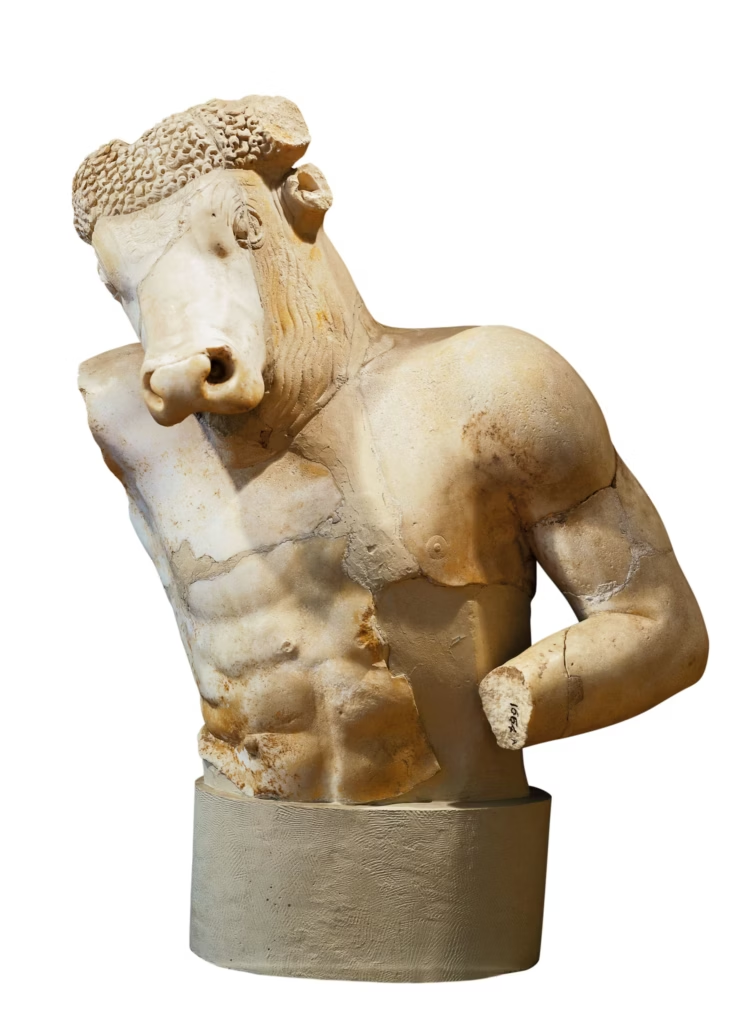
Ancient Greek Mythology Workshop
Enter the imaginative world of Ancient Greek mythology and explore how ancient societies used mythical creatures to explain, symbolize, and communicate ideas about the world around them. This workshop examines the origins, meanings, and cultural functions of legendary beings, revealing how mythology reflected the values, fears, beliefs, and experiences of ancient communities.
Beginning with an introduction to Ancient Greek mythological traditions, participants will explore a range of mythical creatures and analyze the roles they played within their cultural contexts. Through the study of figures such as hybrid beings, monsters, guardians, and divine creatures, participants will investigate the deeper purpose behind these stories: What did these creatures represent? What human concerns, natural forces, or social ideas did they embody? Why were certain forms and characteristics chosen? Participants will learn that mythological creatures were not created randomly, but were shaped by the environments, beliefs, and traditions of the societies that imagined them. They will examine how many legendary beings followed specific cultural rules, symbols, and storytelling conventions, allowing them to understand mythology as a structured form of communication.
Inspired by these examples, participants will design their own mythological creature. They will create its appearance, choose its name, define its abilities, and explain its purpose or function within an imagined cultural context. Each creation must follow the same principles as ancient mythology — reflecting a society’s beliefs, values, environment, or challenges.
Ancient Board Games Workshop
Discover how games have connected people across thousands of years and explore what play can reveal about the daily lives, values, and social interactions of ancient societies. This interactive workshop examines the similarities and differences between ancient and modern games, revealing how many forms of entertainment have evolved while preserving surprisingly familiar elements.
Beginning with an introduction to play in the ancient world, participants will explore how games reflected everyday life in societies such as ancient Greece and the wider Mediterranean. They will learn about street games, competitive activities, and ancient board games, discovering how people of different ages and social backgrounds used play for entertainment, skill development, social bonding, and even learning.
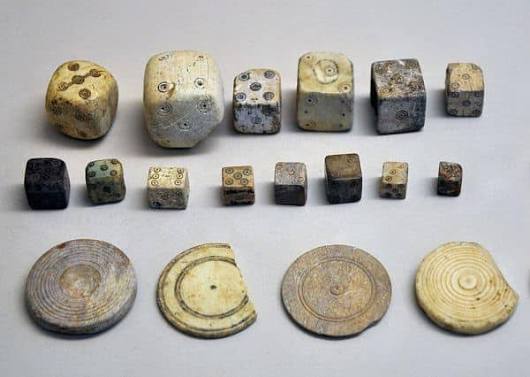
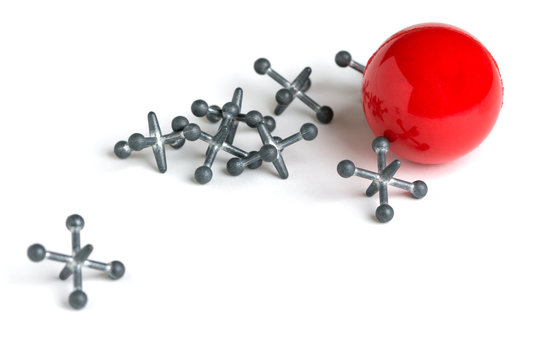
Through the study of archaeological evidence, participants will investigate ancient gaming objects such as dice, knucklebones (astragaloi), game pieces, and boards. They will examine how these objects were made, how they were used, and what they reveal about the people who played with them. The workshop moves from observation to participation, allowing participants to learn the rules of ancient games and experience them firsthand. They will play recreated versions of historical games, experiment with ancient forms of chance and strategy, and reflect on how play has remained an essential part of human culture.